| Following the results of
an informal survey posed in the summer newsletter, Kane County Audubon is
planning a spring birding trip to Arizona! The number of birders is
limited to eight. If you are interested in participating in this trip,
please read the information below, contact Paul Mayer (630.209.6019)
expressing your interest, and forward to him your deposit and the
completed registration form linked at the bottom of this page.
General
Trip Information ►Please
click on this link to print a copy of the general trip information.
Expenses: Expenses are separated into two categories: self-paid and shared. Self-paid will include air fare, meals, any travel insurance you may wish to purchase, drinks other than water in the van, cab or limo fares, personal items and expenses, etc., etc.. These are not included in the $970 that goes toward shared expenses. Shared expenses are all those things which have been included in the cost of the trip on the registration form. Your total cost will be the sum of the self-paid and shared expenses. Shared expenses will include but not be limited to costs for hotels, guide fees, rental of a 15 passenger van, gas, donations and admission fees to parks and the Arizona-Sonoran Museum, leader’s air fare and hotel expense, miscellaneous odds and ends such as a Styrofoam cooler, water, etc., and a contingency fund for unexpected needs. (I think we’re well enough planned out that we won’t need this but it will be there just in case.) The trip will have a minimum of six and a maximum of eight participants plus the leader. The costs have been calculated based on eight participants and may fluctuate depending upon how may attend. When we return, any remaining unspent funds will be redistributed to the participants. If the refund comes to $10 or less per person, it will simply be donated to Kane County Audubon. Registration, Deposits, Cancellations, and Payments: This is our first time in KCA doing a trip of this magnitude so we’re lacking in experience with regard to organizing. We have “borrowed” ideas, formats, and procedures from tour groups to put together our process. The registration seems pretty straight forward and the indemnity clause appears standard with all the other organizations offering tours. Once you have decided you want to go, contact Paul Mayer by email (mayersbirds@comcast.net), or phone (630) 209 6019 and declare your intention. You will be added to a list. We will need a minimum of six and a maximum of eight participants. If less than six sign up by October 15, 2011, the trip will be canceled. If more than eight want to sign up, a waiting list will be maintained and if any dropouts occur that slot will be filled based on their place on the list. Deposits secure your place on the trip.
Air Travel: We want to arrive in Tucson by noon on Sunday. Southwest Airline, United, and American all offer flights that will have you there by that time. Several months before the trip we’ll watch the air fares and schedules and we can try to get as many of us on the same flight(s) as possible. Direct flights are best as this minimizes the chances of lost luggage. However, just in case, be sure to pack essentials and medications in a carry-on. We can also work on car pooling to get to the airport.
Climate, Environment and Terrain: Southeast Arizona in May is almost as good as it gets. Evening, nighttime and early morning temperatures are historically in the 50’s with possible lows dipping into the 40’s. Daytime temperatures average in the high seventies to mid-eighties. Rain is uncommon (20% chance or less) but you should always be prepared. You may wish to check the 10 day weather forecast when packing. It would also be worth considering dressing in light layers and bringing a knapsack along to enable you to shed clothing as the day goes on. Since we will be in high desert country the humidity tends to be low most of the time. That means you’ll stay cooler through evaporation so be sure to stay hydrated all during the day. Insects have never been a problem and I wouldn’t anticipate any changes this year. As far as walking is concerned we will encounter a variety of terrains. Many of the trails and roads are smooth and should present few problems. There will be a few places where hiking will not only be uphill (and downhill coming back) but may require some slight amount of climbing over rocks or boulders. It is recommended that for these days you have a comfortable pair of hiking boots with good ankle support. We don’t want to have to drag anyone off a mountain because of a sprained foot. Health and Well Being: Hiking at higher elevations (we may be as high as 9000 ft. at times) could pose a problem if you suffer from or are prone to pulmonary or cardiac problems. Be sure to let us know if that’s the case. Also be sure to carry with you a list of medications you may be taking or would require in an emergency and have it readily available. The major concerns are sun exposure and dehydration. Be sure to bring sun screen (SPF 30) and we’ll be sure to have plenty of water available. Our pace for the walks will be moderate (like a KCA ramble only longer). Most of the walks should be no more than two or three miles in length. We will not be doing anything too exerting during the hottest parts of the day to avoid over-fatigue and heat stroke. Accommodations: We will be out for seven nights and be staying at moderately priced hotels (mostly Comfort Inns or Suites). Costing has been based upon double occupancy. Anyone wishing a room of their own will pay a single supplement of $382 which is half of the full room price for the seven nights. Everyone can pick their own roommates. If you have no preferences we will pick one for you. Then there’s the conundrum of “I want to share to save money but nobody is available” or “I’m one left over”. To cover this contingency (once all the doubles have been assigned) all rooms will be paid by the leader and will be paid out of the shared expense pool so we’ll be able to equalize the costs out and keep them as low as possible for everyone. Area Information: After everyone is registered and sometime in November, each participant will be sent additional information about the area and the birds we will be searching for. A study suggestion will be made so you can prepare to “call them out”!
KCA Southeast Arizona Itinerary, May 2012 ►Please click on this link to print a copy of the trip itinerary. There are few U.S. birding destinations that conjure such tantalizing images in the mind of a birder than that of colorful trogons, warblers and hummingbirds against the breathtaking "Sky Island" backdrop of southeast Arizona. Several nocturnal specialties - including "Mexican" Spotted Owl, Whiskered Screech-Owl and the recently split Mexican Whip-poor-will - also make their home in these mountains. May is a prime time to explore the diverse biomes of the borderlands of Arizona. All of our breeding specialties have arrived and are vocal on territory, while later migrants are still moving through. Owls are more easily detected at this time than any other and hummingbird numbers are high. Sulphur-bellied Flycatchers give their "squeaky-toy" calls from sycamore-lined canyons alongside Elegant Trogons, while amazing breeding warblers including Red-faced, Olive and Virginia’s carry out their life cycle in the higher elevations. Such tantalizing species as Mexican Chickadee, Black-capped Gnatcatcher and Rufous-winged Sparrow are birds only readily found north of the Mexican border in southeast Arizona. Add the potential for rare vagrants from the south, and you can see why a May trip to this fantastic birding location is a must!” These are the words from the experts who know; John Yerger and Adventure Birding in Tucson Arizona.Itinerary Sunday, May 6 - Day 1 Sunday we will travel to Tucson arriving by noon. At least three airlines offer flights arriving by that time. After assembling everybody and procuring the necessary supplies we will proceed to a nearby Tucson restaurant for lunch. After lunch we will visit the Arizona-Sonoran (living) Desert Museum which is not only a great place to begin to see wild desert birds but also to view many of the birds (especially hummers) we will be seeing in the wild. Standing in an aviary with hummingbirds flying all about you is an excellent opportunity to study these birds up close and even to get some great pictures. After a few hours at the museum and depending upon the time and temperature we may proceed to Sweetwater Wetland to look for local waterfowl and passerines. Then it’s on to Green Valley where we’ll have dinner, get sandwiches made for the next day spend our first night.
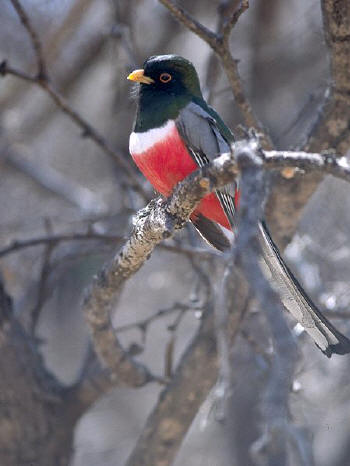
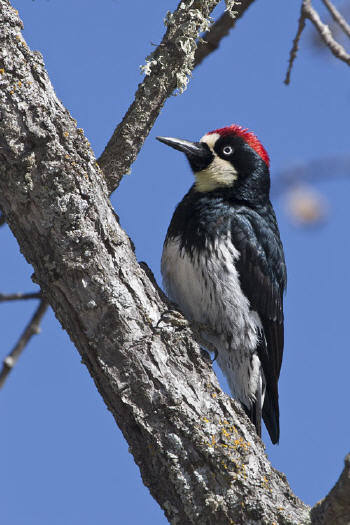
Getting an early start, we will head for Madera Canyon. On the way we will stop in several locations to look for high desert grassland birds such as Rufous-winged Sparrow, Botteri’s Sparrow, Cassin’s Sparrow, and the “Lilians” Eastern Meadowlark (a candidate for a split from the Eastern Meadowlark). Then getting into the canyon we’ll work our way to the upper parking lot at the trailheads. On the way up we’ll be stopping at several places looking for such birds as Acorn Woodpecker, Elegant Trogan and other assorted Western birds. We’ll probably lunch at the trail head before proceeding up toward the Mt. Wrightson Wilderness Area. This will probably be our most exerting hike with an elevation gain of perhaps a thousand feet. In mid-afternoon we’ll head back down the canyon getting to Green Valley around five or six o’clock. Dinner will be in Green Valley followed by a good night’s sleep.
Tuesday morning we’ll check out and get an early start to the Nogales/ Patagonia area. Our probable first stop will be Kino Springs where we’ll search for Gray Hawk, Tropical Kingbird, Long-billed Thrasher and always keeping our eyes open for Ruddy Ground Dove which have appeared on occasion. After leaving Kino Springs we’ll make our way back to Patagonia Lake State Park, a renowned birding destination where we’ll look for area specialties which could include Northern-beardless Tyrannulet and where Black-capped Gnatcatchers have nested in the past. The park also has a well deserved reputation for itinerant rarities. After lunch we’ll venture over to Paton’s Birder Haven where a series of feeders could draw eight to ten species of hummingbirds and several ground feeders. This is one of the best places to see the much sought after Violet-crowned Hummingbird. Then, time permitting, we’ll visit the Patagonia Roadside Rest. After we’re well worn out we’ll head for Sierra Vista, dinner and a chance to meet John Yerger. If we get there early enough we may wander up into one of the canyons to do some late afternoon birding.
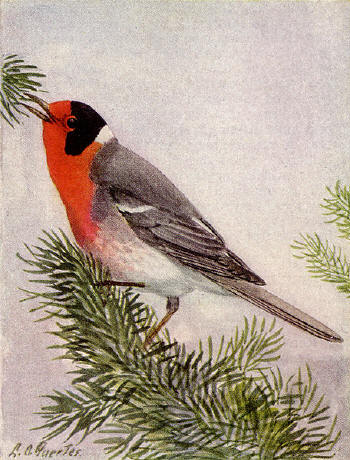
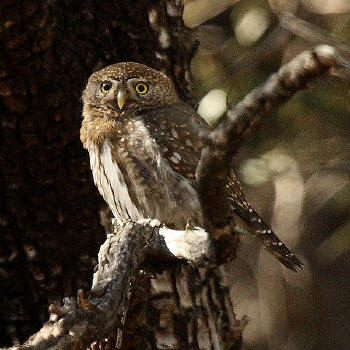
“After breakfast, we will bird Carr Canyon to search for residents including Buff-breasted Flycatcher and Northern (“Mountain”) Pygmy-Owl. Other species of interest here include Red-faced, Olive and Virginia’s Warblers and Greater Pewees with their memorable “Jose Maria” songs. After lunch in Sierra Vista we will visit Beatty’s Guest Ranch and view the amazing hummingbird station that holds the U.S. record for most hummers viewed in one day! Specialties here include White-eared and Blue-throated Hummingbirds. Depending on afternoon temperatures, we may visit Ash Canyon Bed & Breakfast or retire to our hotel to cool off and have dinner. We will spend the night in Sierra Vista.”
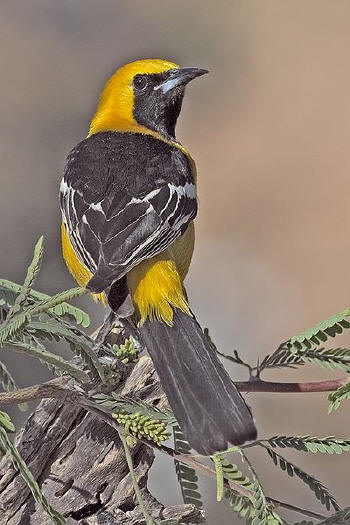
For Thursday, John again sets the agenda: “We will bird in Miller or Scheelite Canyon with Spotted Owl as our main target.” [PLEASE NOTE: Sheelite Canyon is located on US Government property (Ft. Huachuca) and you will probably be asked for some form of government issued I.D. I assume that an I.D. acceptable to TSA will be sufficient.] “Today we will also visit Ash Canyon Bed & Breakfast for the great feeder station that regularly holds the highly localized Lucifer Hummingbird. In addition to this rare hummer, the great feeder set-up affords incredible views of species including Hooded Orioles and Acorn Woodpeckers. After lunch we will depart for Portal in the Chiricahua Mountains where we will be based for the next two days”. After dinner we will go owling as well as looking for the recently split Mexican Whip-poor-Will. Then we’ll overnight in Portal.
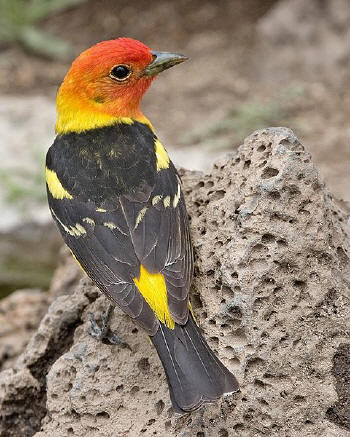
On Friday John will be guiding us to the Cave Creek area. In his proposal he writes: “We will bird South Fork in the morning, a location that has produced many unusual species over the years and regularly holds such stunners as Elegant Trogon, Hepatic and Western Tanagers and more. We will bird several other parts of Cave Creek Canyon before returning to Portal for lunch. Afterwards, we’ll continue at mid-elevation until early afternoon, at which point we’ll break before dinner to relax and cool off. After dinner, we will bird the Portal–Paradise Road for Black-chinned Sparrows and Common Poorwills as the sun sets. One more night in Portal.
It’s our last day and even though somewhat exhausted we’re going to spend one last half day with John who states: “After breakfast we will drive up in elevation to look for resident warblers, tanagers and flycatchers, but our main target will be the large-bibbed Mexican Chickadee. The range of this species just barely enters the United States, and is found in only two mountain ranges on this side of the border; the Chiricahuas are the most accessible. Short-tailed Hawk has nested nearby in recent years. Driving over Onion Saddle and dropping down into Pinery Canyon, we will bird our way ever lower en route to Willcox where we’ll check the Cochise Lake (aka Willcox Twins Lakes), which is actually a small wastewater effluent pond that always seems to host some unusual bird during migration.” We’ll then bid adieu to John and head for Tucson where we’ll check in at an airport hotel and have a farewell celebratory dinner, toasting to all the lifers seen on the trip.
Breakfast and then we can each catch our flights home.
► Please click on this link to view and print a copy of the registration and waiver form that must accompany your deposit. Complete the form and forward it, with your deposit, to Paul Mayer.
|
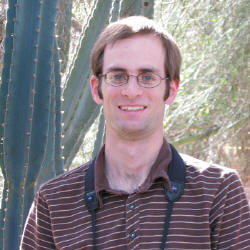 For the next three days we’ll
be putting ourselves in the hands of John Yerger (right), a professional birder
and guide extraordinaire with Adventure Birding out of Tucson. Both Jon
Duerr and I have birded with John and have had wonderful experiences. John
envisions the day as follows:
For the next three days we’ll
be putting ourselves in the hands of John Yerger (right), a professional birder
and guide extraordinaire with Adventure Birding out of Tucson. Both Jon
Duerr and I have birded with John and have had wonderful experiences. John
envisions the day as follows: